Miriam Kuzman, Lisa Sanvito, Bernd M. Mitic, Ozge Ata, Diethard Mattanovich
From bacteria to yeast – is that really possible?
All living cells need metabolic pathways to grow. These pathways consist of many small reactions that work together like cogs in a wheel. In the case of yeasts such as Komagataella phaffii, there is a natural way to use methanol as an energy source – the so-called XuMP cycle.
However, this pathway is not particularly efficient: it consumes a comparatively large amount of energy (ATP). Bacteria, on the other hand, often have a different pathway, the RuMP cycle, which requires less energy.
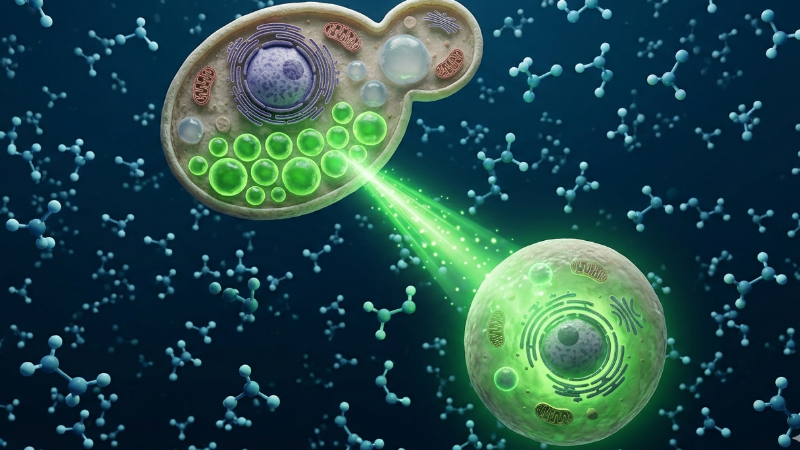
The researchers’ idea was therefore quite bold: why not simply incorporate the more efficient bacterial metabolic pathway into the yeast?
What exactly was done?
In the project described, this is exactly what was attempted: the yeast’s natural metabolic pathway was switched off, and the bacterial RuMP cycle was incorporated instead. The yeast then had to cope entirely with this new ‘foreign’ metabolism – and indeed: the new yeast was able to grow – using only methanol as an energy and carbon source. It was slow at first, but through optimisation and evolution in the laboratory, it improved significantly.